Common Cruise Itinerary Mistakes: A Strategic Guide to Maritime Planning
A cruise itinerary is far more than a simple sequence of geographical coordinates. It is a highly engineered logistical ballet that balances port congestion, fuel efficiency, nautical distance, and local environmental regulations. For the traveler, the itinerary serves as the primary value proposition of the voyage, yet it is often the most misunderstood component of the booking process. The assumption that a port of call listed on a brochure translates directly to a seamless day of exploration is a fundamental error. In reality, the success of a cruise depends on a sophisticated understanding of the variables that exist between the ship’s gangway and the destination’s heart.
Maritime travel introduces specific constraints that land-based travel does not, most notably the “closed-loop” temporal window. Unlike a hotel stay, where the guest controls the arrival and departure rhythm, a cruise passenger is tethered to a rigid maritime schedule dictated by tidal windows and berth reservations. This structural rigidity means that even a minor planning oversight—such as failing to account for the distance between a commercial industrial port and a historic city center—can result in an entire day of wasted potential.
To approach the selection of a voyage with topical mastery, one must look beyond the marquee names of the destinations. A truly informed traveler analyzes the itinerary through the lens of seasonal weather patterns, the “crowd density” of multiple ships in port, and the technical requirements of the vessel itself. This guide deconstructs the systemic errors inherent in maritime planning, offering a definitive reference for those seeking to maximize the “experiential yield” of their time at sea.
Understanding “common cruise itinerary mistakes”
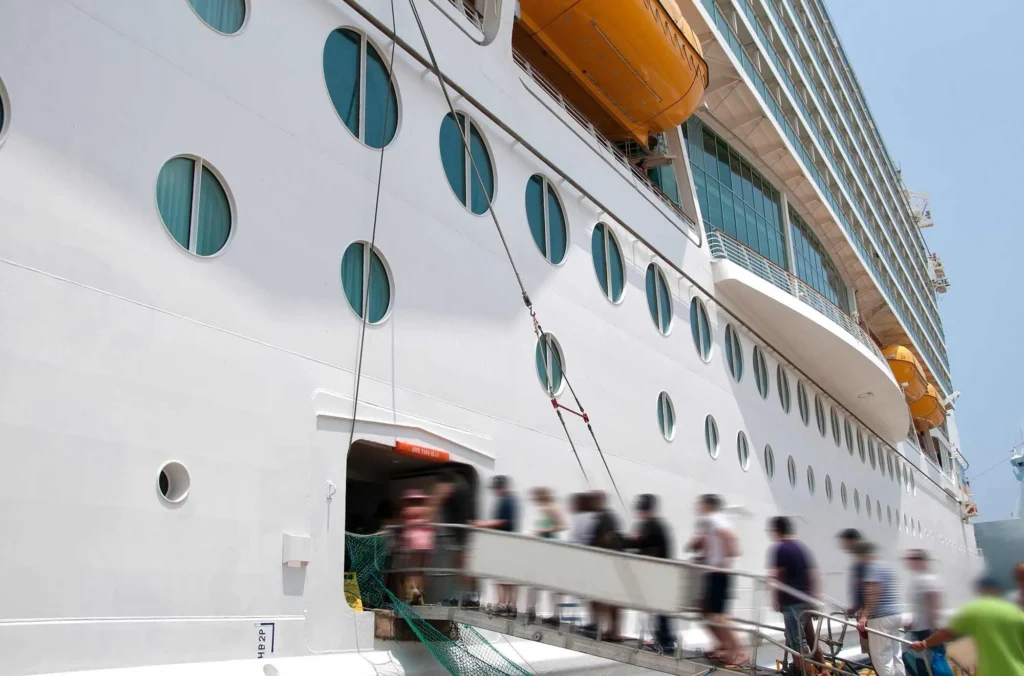
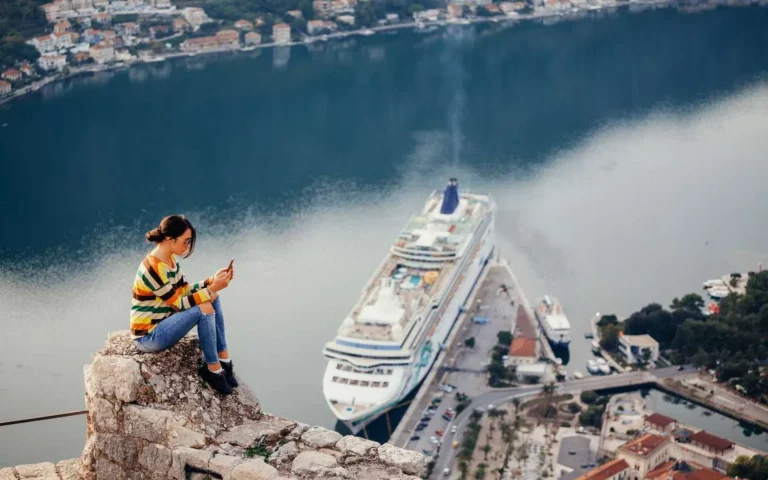
The core of most common cruise itinerary mistakes lies in the failure to distinguish between a “Gate Port” and a “Destination Port.” A Destination Port is one where the ship docks in the heart of the action, such as Key West or Dubrovnik, allowing for immediate immersion. A Gate Port, conversely, is a commercial hub that serves as a transit point for a city located hours away—think Civitavecchia for Rome or Le Havre for Paris. Travelers who fail to recognize this distinction often find themselves spending 50% of their shore time on a chartered bus rather than exploring a museum.
Another layer of misunderstanding involves the “Seasonal Fallacy.” The cruise industry operates year-round, but geographical suitability does not. Booking a Mediterranean cruise in late November because the price is low ignores the reality of shortened daylight hours and the seasonal closure of many seaside attractions. Conversely, an Alaska cruise in early May might offer spectacular mountain views, but many of the inland excursions—such as dog-sledding or certain hiking trails—remain inaccessible due to lingering snowpack.
Oversimplification also plagues the assessment of “Sea Days.” Novice cruisers often view days at sea as “dead time” or a loss of value. This leads to the mistake of booking port-intensive itineraries that leave the passenger physically exhausted and unable to enjoy the amenities of the vessel. Topical mastery requires a balanced approach, recognizing that the itinerary should facilitate both discovery and the restorative benefits of maritime travel.
Deep Contextual Background: The Evolution of Maritime Routing
Historically, cruise itineraries were dictated by the capabilities of the ships. In the mid-20th century, vessels were smaller and could navigate into the heart of boutique ports. As the industry shifted toward the mega-ship era of the 1990s and 2000s, routing became a function of infrastructure. Only specific ports could accommodate vessels with drafts exceeding 28 feet and lengths over 1,000 feet. This led to the homogenization of itineraries, where the same “Big Three” Caribbean ports became the standard for every major line.
In the modern era, the evolution has taken another turn: “Overtourism” and environmental regulation. Cities like Venice and Amsterdam have implemented strict bans or diversions for large ships, forcing cruise lines to utilize alternative ports that were never intended for high-volume tourism. This has introduced a new category of common cruise itinerary mistakes: the assumption that a ship will dock where it traditionally has. A traveler may book a “Venice” cruise only to find the ship actually docks in Trieste or Marghera, requiring a two-hour transfer.
Conceptual Frameworks and Mental Models
The “Port Density” Model
When evaluating an itinerary, calculate the ratio of total passengers in port to the size of the destination. If four mega-ships are in a small port like Grand Cayman simultaneously, the local infrastructure (taxis, beach clubs, restaurants) reaches a breaking point. An elite itinerary choice avoids high-density days in favor of “off-peak” port visits.
The “Nautical Distance vs. Speed” Framework
Understand that a ship’s speed affects its environmental and financial footprint. If an itinerary attempts to cover 500 nautical miles between 6:00 PM and 7:00 AM, the ship must travel at high speed, increasing vibration and fuel consumption. Itineraries with shorter hops between ports often provide a smoother ride and longer “all-aboard” times.
The “Bucket List” Entropy Model
The desire to see as many “marquee” cities as possible often leads to “itinerary entropy”—a state where the traveler is so overwhelmed by the logistics of moving between diverse cultures and climates that the individual value of each destination is lost. The goal should be “depth over breadth.”
Key Categories of Itinerary Archetypes
Each itinerary structure carries inherent risks and rewards. Understanding these trade-offs is essential for avoiding common cruise itinerary mistakes.
| Itinerary Type | Primary Benefit | Significant Risk | Best For |
| Port-Intensive | Maximum exploration; high value | Physical exhaustion; limited ship time | Active explorers; first-timers |
| Transatlantic | Relaxation; low cost per day | Rough seas; limited port variety | Readers; spa-goers; retirees |
| Loop / Round-trip | Easy logistics; flights are simpler | Repeating ports; limited range | Families with children |
| One-Way (Open Jaw) | Deep immersion; more range | Expensive flights; logistical complexity | Seasoned travelers, “slow” travel |
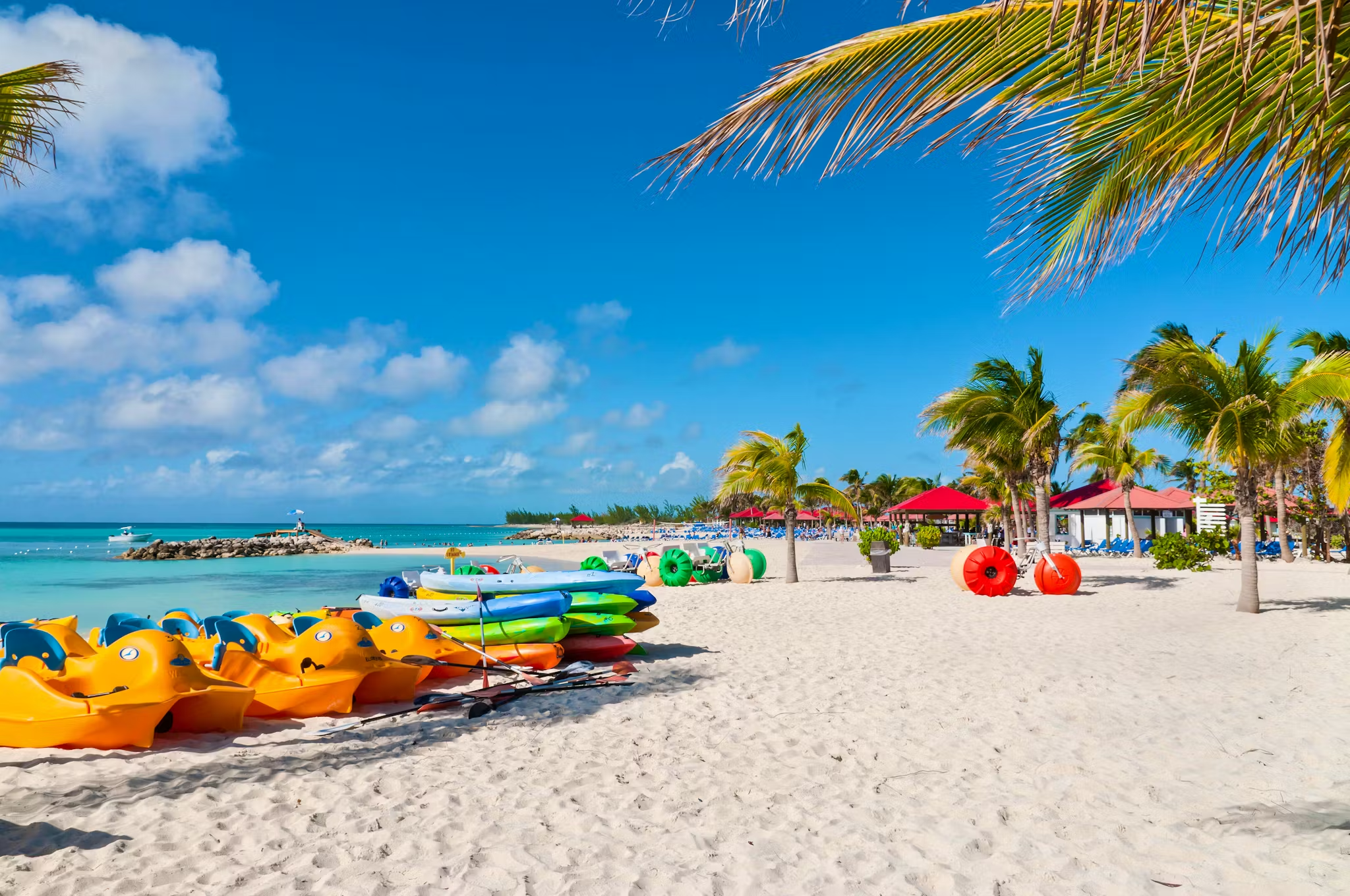
| Private Island | Controlled environment; free food | Artificial; no cultural immersion | Beach days; families |
Realistic Decision Logic
A traveler considering a Western Mediterranean loop must decide: do they want the “highlights” of Spain, France, and Italy, or do they want to focus solely on the Greek Isles? The former involves high-speed logistics and long bus rides. The latter offers a more relaxed pace but potentially higher costs for local ferries or boutique excursions. Avoiding common cruise itinerary mistakes means choosing the modality that matches your actual physical energy level, not your aspirational one.
Detailed Real-World Scenarios
Scenario 1: The “Rome” Day Trip Logistical Failure
A passenger books a cruise docking in Civitavecchia from 7:00 AM to 7:00 PM. They plan to take the train to Rome independently.
-
Failure Mode: The train station is a 20-minute walk from the port gate. The train takes 80 minutes. The traveler realizes they only have 5 actual hours in the city.
-
Second-Order Effect: Stress leads to rushing, which leads to missing the return train, resulting in a “pier runner” situation or being left behind.
Scenario 2: The Alaska Shoulder-Season Trap
Booking an Alaska cruise in late September for a low price.
-
Failure Mode: The “rainy season” in Southeast Alaska begins. 50% of the shore excursions are canceled due to fog or wind.
-
Observation: The itinerary looks the same on paper, but the realized itinerary is vastly different.
Scenario 3: The Caribbean Hurricane Cycle
Planning a multi-generational family reunion in the Eastern Caribbean for September.
-
Failure Mode: A tropical disturbance forces the ship to divert to the Western Caribbean.
-
Result: The family, who had pre-planned specific excursions in St. Thomas, finds themselves in Cozumel, where they are unprepared and frustrated.
Planning, Cost, and Resource Dynamics
The “Total Cost of Itinerary” (TCI) is often higher than the cruise fare. This is where the most common cruise itinerary mistakes manifest financially. A port-intensive cruise requires a larger budget for tours, meals on shore, and local transport.
| Cost Component | Port-Intensive (7 Days) | Sea-Day Intensive (7 Days) |
| Cruise Base Fare | $1,200 | $800 |
| Shore Excursions | $700 ($100/day) | $200 (2 ports) |
| On-Shore Sustenance | $250 | $50 |
| Estimated Total | $2,150 | $1,050 |
The opportunity cost of a port-heavy itinerary is the “Sunk Cost” of the ship’s amenities. If you have paid for a premium suite with a private lounge but are off the ship for 12 hours every day, the “value per hour” of that suite drops precipitously.
Strategies, Tools, and Support Systems
-
Port Load Trackers (Cruisemapper / Portatest): These tools allow you to see how many other ships are in port with you. If the count exceeds 10,000 total passengers, reconsider the date.
-
Google Maps “Transit” Analysis: Before booking, check the transit time from the specific dock (not the city center) to your primary interest.
-
Marine Weather Apps (Windy / MarineTraffic): Understanding the seasonal “wave height” of a region (like the Bay of Biscay or the Tasman Sea) can prevent a miserable experience for those prone to motion sickness.
-
Itinerary Comparison Spreadsheets: Create a “Port-to-Sea Day” ratio. A healthy ratio for relaxation is 2:1.
-
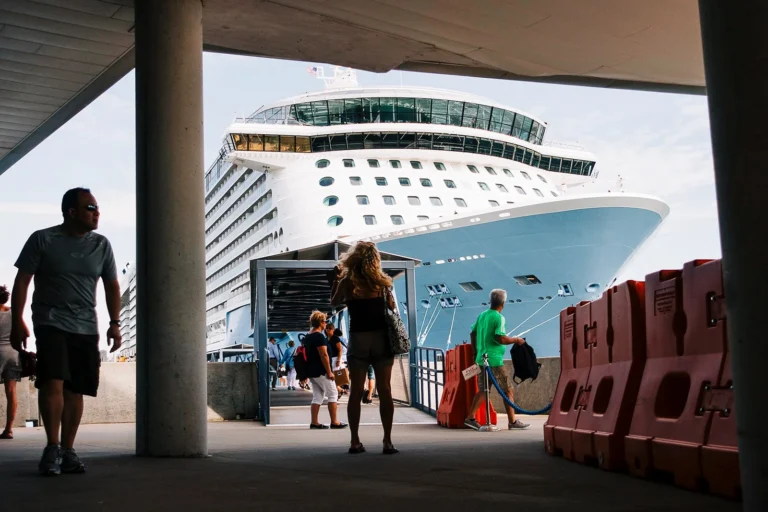
The “Tender” Check: Identify which ports require “tendering” (using small boats to reach shore). Tendering adds 60–90 minutes of logistical friction to each side of the day.
-
Local Holiday Calendars: Ensure your visit doesn’t coincide with a national holiday where everything is closed (e.g., Ferragosto in Italy).
The Risk Landscape and Failure Modes
The Taxonomy of Itinerary Risks
-
Regulatory Risk: Local governments changing “all-aboard” times to mitigate noise or pollution.
-
Climatic Risk: Heat domes in Europe or Hurricanes in the Atlantic.
-
Geopolitical Risk: Sudden closure of ports due to regional instability (common in the Middle East or Northern Europe).
Compounding Risks
A “tendering” port combined with a high “port density” day is a recipe for disaster. If 15,000 people are trying to use 20 small lifeboats to reach a single pier, the delay becomes exponential. This is a classic example of how multiple common cruise itinerary mistakes compound to ruin a travel experience.
Governance, Maintenance, and Long-Term Adaptation
Mastering the maritime itinerary requires an “active monitoring” phase between booking and embarkation. Cruise lines reserve the right to change ports at any time.
The Itinerary Review Cycle
-
T-Minus 90 Days: Re-check port schedules. Did the docking location change?
-
T-Minus 30 Days: Audit the “All-Aboard” times. Did the line shave an hour off the visit to save on fuel?
-
T-Minus 7 Days: Check the long-range weather forecast for sea-state anomalies.
Layered Checklist for Financial Integrity
-
Phase 1: Identify “Gate Ports” vs. “Pedestrian Ports.”
-
Phase 2: Calculate “Total Cost of Discovery” including transport from the gate.
-
Phase 3: Evaluate the “experiential overlap” (e.g., do you need to visit three different Caribbean beaches on one trip?).
Measurement, Tracking, and Evaluation
How do you know if your itinerary planning was successful? Use these metrics:
-
Quantitative Signal (The “Active Discovery” Ratio): Total hours spent at a destination divided by total hours the ship was in port. An efficient itinerary achieves >80%.
-
Lagging Indicator (The “Exhaustion Index”): Did you feel the need for a “vacation from your vacation” upon returning? If yes, the itinerary was too dense.
-
Qualitative Signal: The number of “Planned vs. Realized” activities. If you missed 50% of your goals due to logistics, the planning was flawed.
Common Misconceptions and Oversimplifications
-
Myth: “The ship always waits for you.” Correction: Only if you are on a ship-sponsored excursion. If the itinerary says 5:00 PM, the lines are cast at 5:00 PM.
-
Myth: “A 7-day cruise means 7 days of vacation.” Correction: Day 1 is for embarkation; Day 7 is for 6:00 AM disembarkation. You effectively have 5 days.
-
Myth: “Mediterranean cruises are always warm.” Correction: In the spring or fall, the “Mistral” or “Tramontane” winds can make a deck-top experience freezing.
-
Myth: “Private islands are just beaches.” Correction: They are highly monetizable corporate environments where “included” food often stops at 2:00 PM, and shade (umbrellas) often carries a surcharge.
-
Myth: “Western Caribbean is the same as Eastern Caribbean.” Correction: Western is culturally richer (ruins, jungles); Eastern is geographically superior for beaches and sailing.
Conclusion: The Synthesis of Choice and Reality
Selecting a cruise is a balance between the romanticism of the sea and the cold reality of maritime logistics. The most common cruise itinerary mistakes occur when a traveler prioritizes the “image” of a destination over the “process” of reaching it. Topical mastery in this field requires a shift in focus from where the ship is going to how the ship interacts with those locations.
Ultimately, a successful itinerary respects the constraints of the sea while maximizing the opportunities of the land. It avoids the fatigue of over-scheduling, accounts for the technicalities of port access, and remains flexible enough to adapt to the whims of the environment. By treating the itinerary as a complex system rather than a static list, you ensure that the voyage becomes a definitive reference for how to see the world properly from the water.